
Links and write-ups about beautiful things from around the web!
-
dpBestflow: Digital Photography Best Practices

The American Society of Media Photographers has a new resource up for people working with digital images: dpBestflow rounds up the best practices and workflows for digital photography, in neat, easy-to-digest pieces, with tips on subjects ranging from camera file formats to desktop hardware to room lighting. If you look at their handy Quick Reference overview, be sure to note that each bullet point links to a more in-depth piece if you’re interesting in drilling down for more info…
(Via John Nack)
-
But Gladwell Frequently Holds Forth About
But Gladwell frequently holds forth about statistics and psychology, and his lack of technical grounding in these subjects can be jarring. He provides misleading definitions of “homology,” “saggital plane” and “power law” and quotes an expert speaking about an “igon value” (that’s eigenvalue, a basic concept in linear algebra). In the spirit of Gladwell, who likes to give portentous names to his aperçus, I will call this the Igon Value Problem: when a writer’s education on a topic consists in interviewing an expert, he is apt to offer generalizations that are banal, obtuse or flat wrong. From Steve Pinker’s NY Times book review of Malcolm Gladwell’s “What the Dog Saw”. Further discussion of the Igon Value Effect over at Language Log.
-
From Endless Loop a Brief History of Chiptunes
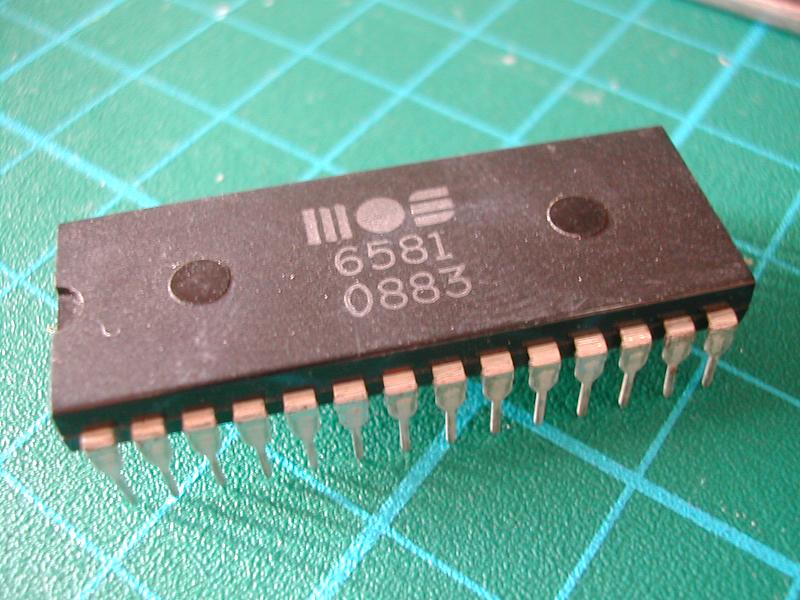
From Endless loop: A brief history of chiptunes:
Pressure Cooker was an ambitious exception among its contemporaries. In 1980, most home computer music remained limited to single-voice melodies and lacked dynamic range. Robert “Bob” Yannes, a self-described “electronic music hobbyist,” saw the sound hardware in first-generation microcomputers as “primitive” and suggested that they had been “designed by people who knew nothing about music” (Yannes 1996). In 1981, he began to design a new audio chip for MOS Technology called the SID (Sound Interface Device). In contrast to the kludgy Atari TIA, Yannes intended the SID to be as useful in professional synthesizers as it would be in microcomputers. Later that year, Commodore decided to include MOS Technology’s new SID alongside a dedicated graphics chip in its next microcomputer, the Commodore 64. Unlike the Atari architecture, in which a single piece of hardware controlled both audio and video output, the Commodore machine afforded programmers greater flexibility in their implementation of graphics and sound […]
When I saw this headline linked by Waxy I took it to be an overview of the recent (late 90’s to now) chiptune music craze, but it’s actually a nice little overview of the nearly 30 years old history of writing music on game hardware. Even includes sections on cracktros, the demoscene, and the early advent of trackers, along with some good videos of the relevant technology.
(Photo of the SID chip via Chris Hand)
-
NASA’s Be a Martian
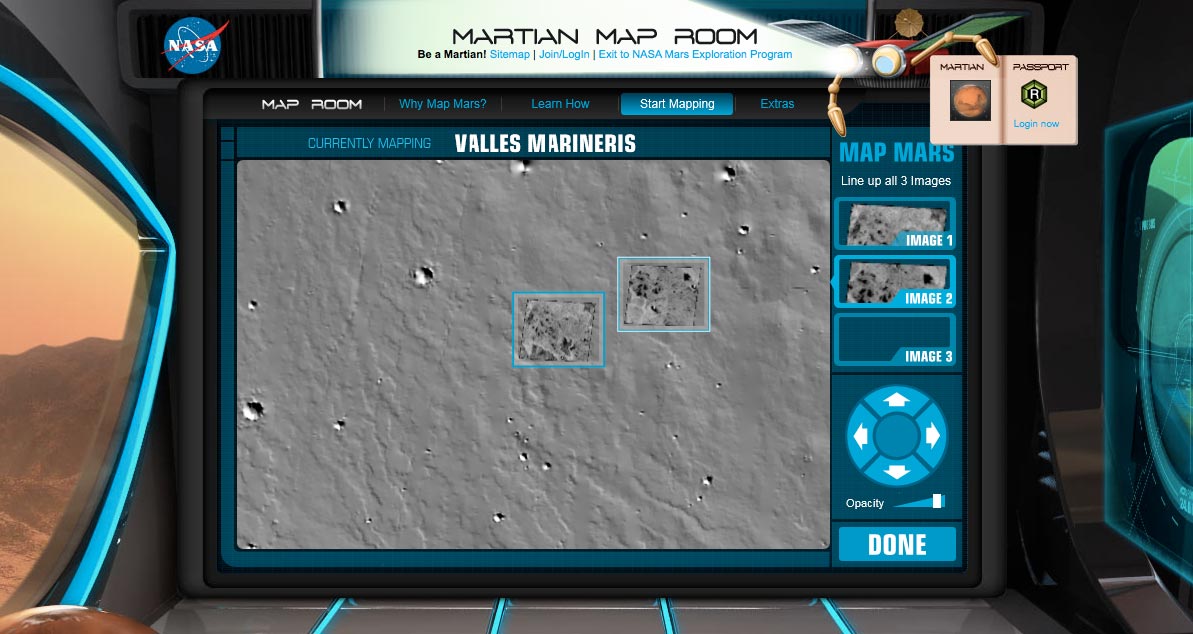
NASA has launched (pardon the sorta pun) a new website for kids called Be a Martian, with various games that allow them to rack up points and earn badges as they learn about the red planet. The interesting twist? The games are actually crowdsourced work, real data sorting through the aligning of map images taken by Mars Odyssey explorer with elevation images from the Mars Global Surveyor project. Kids play a game, NASA gets useful data that’s otherwise hard to get computationally. The Register has a good writeup of the project.
-
Timeline of Analog Video Synthesizers
From the ANIMAC to the FairLight Computer Video Instrument, a nice roundup of mostly analog video-mangling technology from the 1960’s to the 1980’s. Lots of pictures and back stories, too.
(Via Coudal Partners’ Fresh Signals)
-
LEGO Hole Punch!

LEGO holepunch + hip Japanese retailer MUJI = sublime new construction paper fun.
(Via Make and a million other design/crafty blogs)
-
Vanja Mrgan’s Game Character Updates

Illustrator Vanja Mrgan is updating various game and cartoon characters (and some non-imaginary folks, too) with thick, full beards. I particularly like this version of Nintendo’s Mr. Game and Watch.
(Via GameSetWatch)
-
The Last Days of Gourmet Magazine

From Last Days of Gourmet, a photo set depicting the offices of the now-defunct magazine. There are plenty of better photos in the group, lots of scenes of office supplies in the trash and empty workspaces, but I liked this one the best: evidently someone went all Hawkeye Pierce.
(Via Coudal Partners)
-
The Web may have won, but Gopher tunnels on
“[…] gopher [was] an Edenic protocol of innocence (in comparison to HTML, the protocol of commerce and experience)”
Ars Technica checks in on Gopher, the largely-forgotten pre-www protocol for getting information from servers in a simple, hypertext format. It’s out there still, just like the old BBSes, telnet MUDs / MOOs / MUSHes, Usenet, etc., and still useful in some contexts. Very few contexts, maybe – I can’t imagine there’s much in the way of Gopher pr0n or warez trading to give continued backwater life to the old medium, but hey, 4chan’s /b/ is available through Gopher…
What would things would be like if Gopherspace’s concision won out over HTTP’s ability to cram graphics and ads onto every resource? Sounds like our current mobile web app landscape.
-
First Test for Election Cryptography
The difference is that a special type of ink and pen are used. When the voter fills in a bubble on the ballot using the pen, a previously invisible secret code appears in that space. The voter can record the code or codes and then check them later online. If the code is found in an online database, it means the voter’s ballot was counted correctly. Each ballot has its own randomly assigned codes, to prevent this process from revealing which candidates a voter selected.
Using a bit of invisible ink and a unique code to help fight election fraud. Not a bad idea, really, in that it gives at least one form of anonymous checksum to add to the evidence trail. The trouble is whether it will end up confusing the average voter. At least it’s better than trusting in a closed software-based system with no paper trail…
(Via O’Reilly Radar)
