Tag: film

  • Presence is Fleeting: mothers, Frankenstein, and Guillermo del Toro

    I finally carved out the time this weekend to watch Guillermo del Toro’s new adaptation of Frankenstein. It’s good! His version reworks the story and adds some new characters here and there, but it hews closer to the Mary Shelley novel (the original original one she wrote as a teenager, before her later rewrites) than other film adaptations tend to do, while retaining the galvanic spectacle of the 1931 James Whale movie that captured del Toro’s attention as a devout Catholic child in Mexico.

    The trope of the absent or dead mother in fairy tales, Disney movies, and other pop culture (including Mary Shelley’s work) has been widely written about, and the horrors of miscarriage and childbirth are a through-line of del Toro’s films. There’s plenty to unpack about his Frankenstein‘s added focus on fathers — cycles of cruelty and disregard for their creations — so the insights about del Toro’s own family experiences from this recent New York Times writeup jumped out to me:

    Curiously, there are no mothers in “Frankenstein.” The creature is born out of a man’s scientific ambition, not a woman’s body. The family the creature spies on is missing a mother as well; so is Victor’s betrothed. I have never understood this dogged slaughter of mothers in Shelley’s fiction (motherless characters are common in her subsequent books as well), until del Toro told me of his own mother’s story, how she was blotted out by her mother’s ghost. Absence is more powerful than presence, he explained to me. “Presence is fleeting. Absence is eternal.”
  • Todd Field, Director of Tár … and Big League Chew

    This is some Grade A (or Triple-A?) trivia about the Oscar-winning director Todd Field:

    Soon they were experimenting in the kitchen of Candy Field, Todd’s mother, who still lives in the Portland, Ore., home where Big League Chew was pioneered. To imitate the brown color of chewing tobacco, Nelson ordered a root-beer-flavored, gum-making kit from a company in Texas, which he discovered in the pages of People magazine, and they sliced their first batch of homemade gum with a pizza cutter.

    Better than the origin story of the shredded gum itself is the plot twist: Field feels he’s much better off not having found wealth, fame, and success as a teenager bubblegum magnate, as it would have wrecked his later creative career!

    See also this unexpected connection between Jelly Belly jellybeans and 1970’s sitcom Sanford and Son.

  • Austin Film Tourism Guide

    I’m a sucker for figuring out where very specific things were filmed in Austin, and my neighborhood has been swarmed recently with TV shoots, so this handy new mini-site and interactive map from the Austin Visitor Center is right up my alley.

  • Colors: Where did they go?

    A nice write-up on color grading in films, especially after the 1990s advent of digital intermediates and LUTs — or to say it more clearly, Why do movies all look like that these days??

  • Werner Herzog’s Minnesota Declaration

    Ostensibly a bulleted list of thoughts about Cinema Verité, there are some interesting nuggets in this “declaration” of “truths” that Werner Herzog shared with Roger Ebert back in 1999:

    7. Tourism is sin, and travel on foot virtue.

    8. Each year at springtime scores of people on snowmobiles crash through the melting ice on the lakes of Minnesota and drown. Pressure is mounting on the new governor to pass a protective law. He, the former wrestler and bodyguard, has the only sage answer to this: “You can´t legislate stupidity.”

    9. The gauntlet is hereby thrown down.

    […]

    12. Life in the oceans must be sheer hell. A vast, merciless hell of permanent and immediate danger. So much of a hell that during evolution some species – including man – crawled, fled onto some small continents of solid land, where the Lessons of Darkness continue.

  • We will see Landscapes

    ’We will see… landscapes,’ they announced, ‘in which the trees bow to the whims of the wind, the leaves ripple and glitter in the rays of the sun.’ Along with the familiar photographic leitmotif of the leaves, such kindred subjects as undulating waves, moving clouds, and changing facial expressions ranked high in early prophesies. All of them conveyed the longing for an instrument which would capture the slightest incidents of the world about us.

    Film theorist Siegfried Kracauer writing about the dreams of photography pioneers Henry Cook and Gaetano Bonnelli, who in the 1860s invented a device called a photobioscope that combined stereoscope + zoetrope effects to show primitive short “3D” “movie” loops. It’s interesting to think about the decades in which photography was new and exploding in use, but it couldn’t capture the essence of normal day-to-day movement due to the long exposure times. 

    We’re still chasing those dreams, 150 years later.

    (Via this excellent Bright Wall / Dark Room essay on Totoro)

  • Dennis Hopper Russian Dynamite Death Chair

    [Video no longer available]

    In 1983, immediately after screening his new film Out of the Blue at Rice University, Dennis Hopper invited the attendees out to a racetrack outside city limits by way of school bus where they could watch the actor sit in a chair ringed by dynamite and witness him explode — or hopefully not, if the trick he called the “Russian Dynamite Death Chair Act” is pulled off successfully…

    In attendance for the explosive, not-entirely-sober stunt: Wim Wenders (presumably in the vicinity while filming Paris, Texas?), Terry Southern (screenwriter: Dr. Strangelove, Casino Royale, Easy Rider), and a 22-year-old Sam Houston State student named Richard Linklater (!).

    Dangerous Minds has the full story.

    (hat tip to Caitlin Moore and John-Mike who heard the episode firsthand from Mr. Linklater at a recent Austin Film Society event)

  • Box Office Success Is Wonderful and Thats What

    Box office success is wonderful, and that’s what everyone wants,” says Landis. “But as we all know, lots of shitty movies are huge hits, and lots of great movies fail. You know, Peter Bogdanovich famously said, ‘The only true test of a movie is time.’ That’s the best thing about movies — they still exist.

    If you’re a fan of the movie Clue, go read this piece immediately: “Something Terrible Has Happened Here”: The Crazy Story Of How “Clue” Went From Forgotten Flop To Cult Triumph

    One of my favorite comedies. So many great back stories and insights on how different it could have been (originally to be written by Tom Stoppard! with John Landis directing! and Carrie Fisher and Rowan Atkinson starring!).

    (Hat tip to @jondavidguerra​)

  • Ive Had the Nagging Feeling That Id Seen the

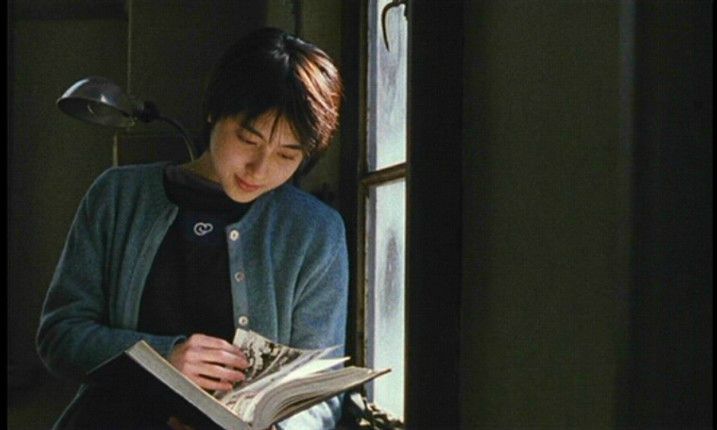
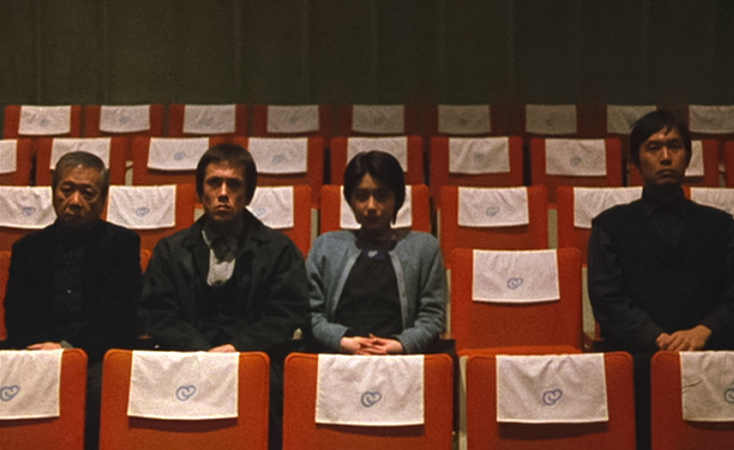
    I’ve had the nagging feeling that I’d seen the Adobe Creative Cloud logo before, and I just remembered where: it’s very similar to the linked-rings logo of the facility seen in one of my favorite movies, Wandâfuru Raifu, which takes place in a sort-of way station on the road to the afterlife (heaven not specified). The female lead wears a necklace with the same symbol, but apart from that the film is entirely vague about the organization (?) that the logo belongs to. Hopefully the hereafter’s movie-making division hasn’t been acquired by Adobe!

    Adobe Creative Cloud logo

    (Screen grab from the Criterion Forums, which made me hopeful that this film was coming out on Criterion…)

  • Shaw and Lee: the Beau Brummels

    Some comedy for your Saturday: Shaw and Lee, AKA The Beau Brummels. We saw this Vitaphone short on TCM last week, and were mesmerized by the duo’s Andy Kaufman-esque deadpan delivery of bad jokes and Vaudeville songs (stick with it for at least a couple of minutes!). Strangely modern, or in any case I gather from digging around that this was considered a bizarre, unique act at the time.

    Always eat when you are hungry.
    Always drink when you are dry.
    Go to bed when you’re sleepy.
    But don’t forget to breathe or else you’ll die.