
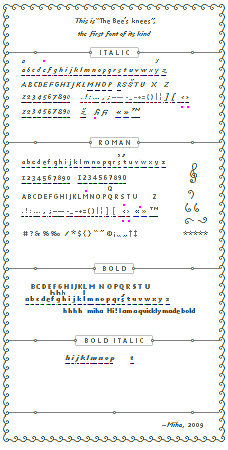
Typophile user Miha is doing some awesome sub-pixel typography experimentation for making tiny text sharper (at least on LCD screens with RGB ordering – sorry CRT holdouts!). It’s this kind of hand-rendering and tailoring that makes this work craft, in the best sense of the word. Drawing out a legible, full alphabet with an x-height of 3 pixels? Impressive.
Month: September 2009
-
Miha’s Sub-pixel Typography
-
Halloween Bat Clothespins
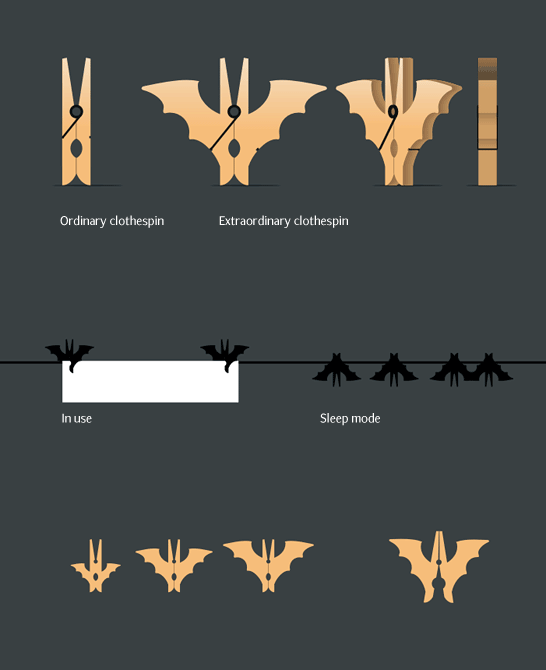
I’d buy these, Halloween time or not. Vespertiulium Clothes Pegs, by Art. Lebedev Studio.
(Via FFFFOUND!)
-
Binocular Diplopia and the Book of Kells
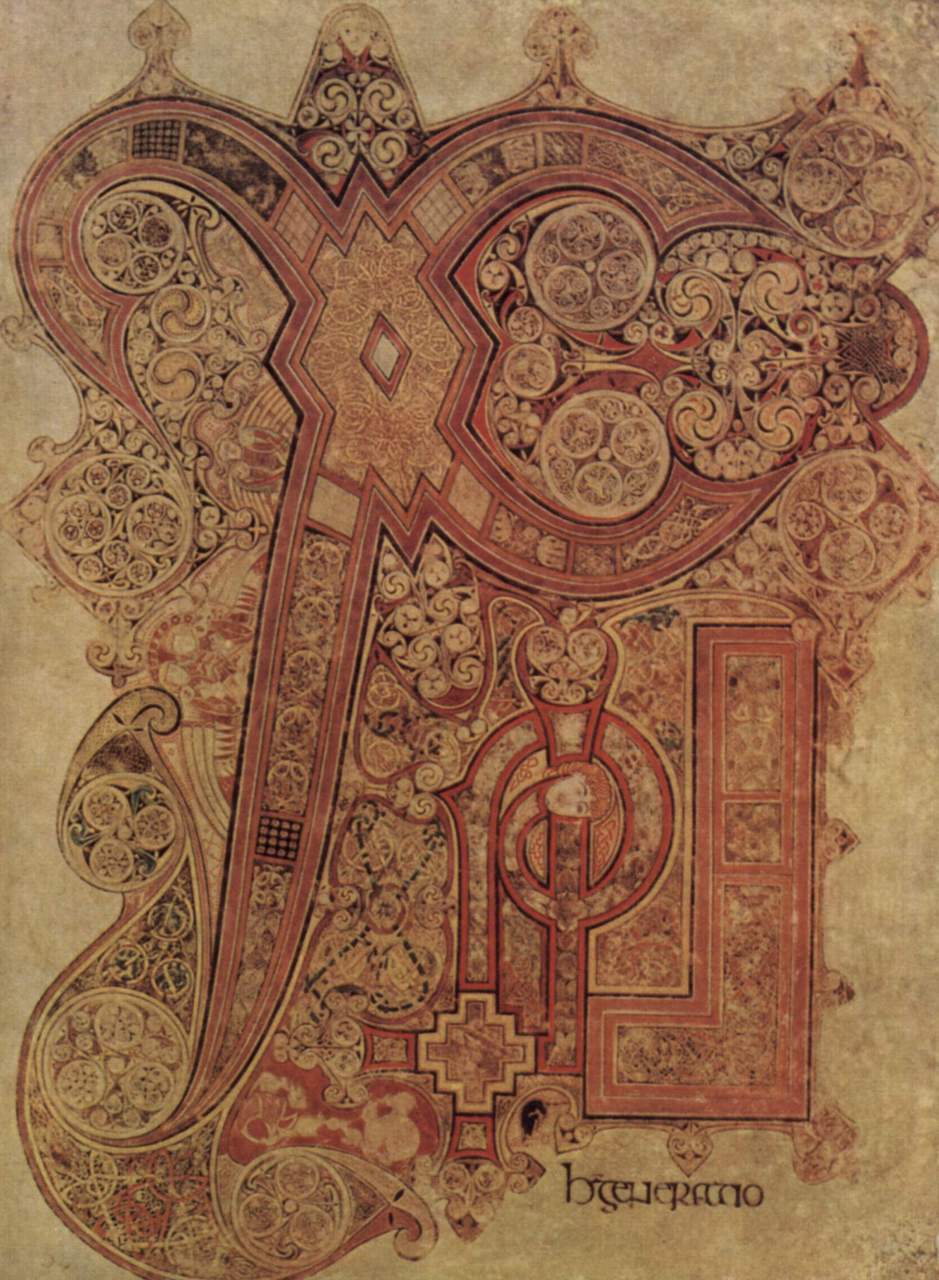
How did reclusive monks living in the year 700 or 800 AD draw the intricate lines of the Book of Kells, rendered by hand at sub-millimeter resolution (about the same level of detail as the engraving work found on modern money), hundreds of years before optical instruments became available, hundreds of years before the pioneering visual research of Alhazen? According to Cornell paleontologist John Cisne’s theory, their trick was in the detail and pattern: by keeping their eyes unfocused on the picture plane, the monks could superimpose their linework and judge the accuracy against the template using a form of temporary binocular diplopia (sort of like willing yourself to view a stereograph or one of those Magic Eye posters).
That’s amazing.
-
On “Goo goo g’joob”
One widely circulated tidbit is that Lennon was inspired by James Joyce’s Finnegans Wake while writing the song. This would fit nicely with the Lewis Carroll homage, since Humpty Dumpty figures in Joyce’s stream-of-consciousness masterpiece as well. (Finnegan’s fall from a ladder resonates with the fall of Humpty Dumpty and the Fall of Man.) According to Beatles lore, “goo goo goo joob” are “the last words uttered by Humpty Dumpty before his fall.” This was a popular notion among the conspiracy theorists who were convinced that Paul McCartney had died in a mysterious accident and looked for clues to his demise in Beatles lyrics.
The only problem with the Joycean theory is that “goo goo goo joob” does not actually appear in Finnegans Wake. The closest approximation in Joyce is “googoo goosth,” which doesn’t quite have the same ring to it. There’s also no evidence that Lennon was actually reading Finnegans Wake at the time, so the imprint of Joyce is not nearly as clear-cut as that of Lewis Carroll.
The other tidbit that folks use to tie I Am the Walrus to the Wake, not mentioned here, is that the book’s protagonist Humphrey Chimpden Earwicker / Haroun Childeric Eggeberth / HCE, is described as a walrus of a man, for both his girth and his mustache. And that’s about it. Again, nothing particularly convincing, so I’m glad to see a good debunking. More interesting in this article is the speculation about which came first: “goo goo g’joob” or Simon & Garfunkel’s “coo coo cachoo” (or is it ‘boop oop a doop’)?
-
Speed Projects Approved
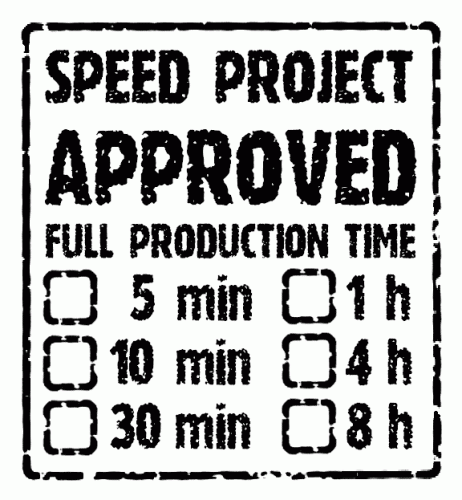
Speed Projects, go! A good reminder/incentive from the FAT LAB crew to stop screwing around and get more projects done, faster.
-
The 1949 Harwell/WITCH
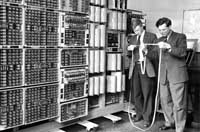
The “world’s oldest [working] computer”, the c.1949 Harwell/WITCH, is undergoing restoration for display at Bletchley Park’s National Museum of Computing, and will be exhibited next to the Colossus Mk2. I’d make them play chess against each other.
(Via El Reg)